
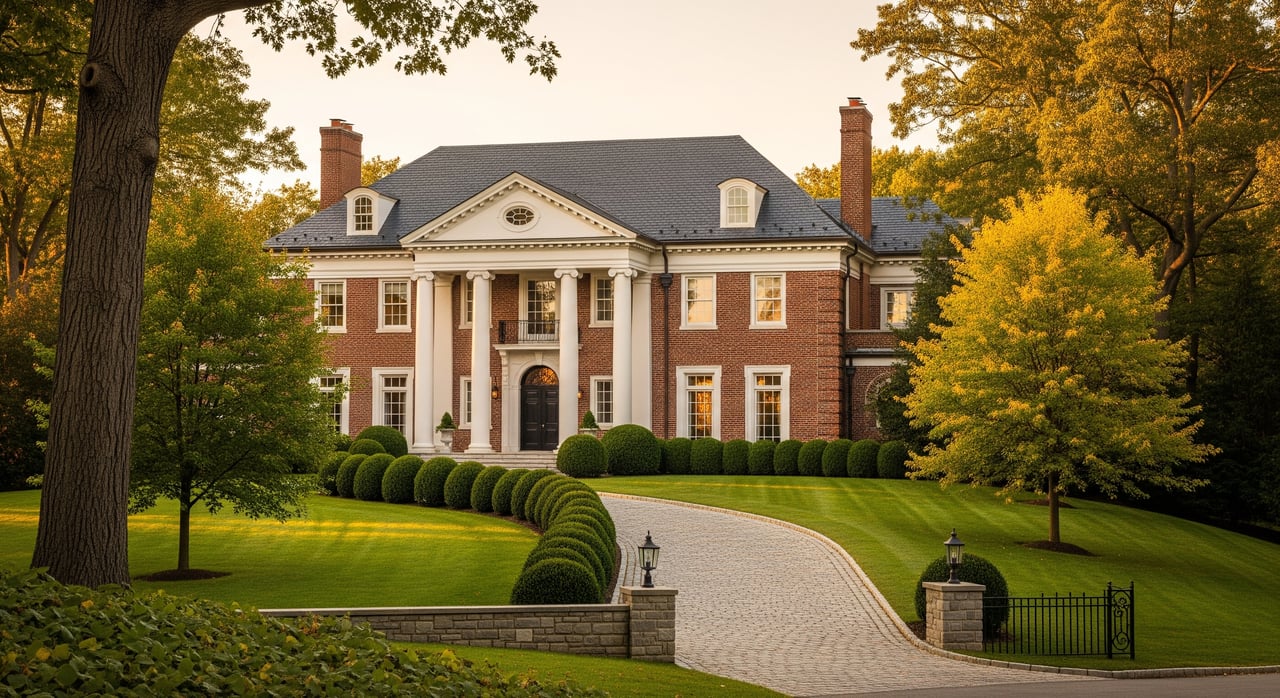
Thinking about buying in Bloomfield Hills? You are not alone. Early-stage buyers often ask whether to act now or wait, how luxury listings behave, and what it really takes to win a home here. In this guide, you will learn how to read the local numbers, what is different about the estate market, and the offer strategies that work in Bloomfield Hills and nearby Bloomfield Township. Let’s dive in.
Market fundamentals to watch
Understanding a few core metrics will help you make confident decisions, even before you tour your first home.
Pricing trends
- Median and average sale price: Median is your best baseline because it is less affected by very large estate sales. Track the last 3, 6, and 12 months and compare to the same periods last year to see direction.
- Price per square foot: Useful for comparing similar homes. In the luxury tier, expect wide variance based on lot quality, architectural features, and custom finishes.
- List price trends: Watch whether new listings are pushing higher or leveling off. That can signal seller expectations.
Inventory and absorption
- Active and new listings: Review rolling 30, 60, and 90 days to sense flow. A drop in new listings with steady demand can tighten competition.
- Months of inventory: Use this rule of thumb. Less than 4 months is a strong seller’s market, 4 to 6 months is balanced, and more than 6 months is a buyer’s market. Check MOI for both the overall market and the $1 million and up tier.
Speed and leverage
- Days on market: Low DOM combined with low inventory points to multiple offers. Luxury DOM often runs longer than the overall market.
- Sale-to-list price ratio: Near or above 100 percent often signals competitive bidding. In the upper tier, a few standout sales can temporarily skew this, so look at medians and ranges.
- Price reductions: If the share of listings with reductions rises quickly, it can indicate initial overpricing or cooling demand.
Demand conversion
- Pending-to-active ratio: A higher ratio shows that new inventory is being absorbed quickly.
- New-pending conversion rate: Track how many new listings go pending within 14 or 30 days. This helps you judge how fast you must act.
Price tiers and financing mix
- Tier share: In Bloomfield Hills, a meaningful slice of activity sits in the $1 million and up range. Track inventory and DOM by tier rather than only market-wide averages.
- Financing: Expect more cash and jumbo financing in the luxury segment. This affects appraisal risk, timelines, and how you structure your offer.
Luxury and estates: what changes
Bloomfield Hills’ estate market behaves differently than nearby middle-tier suburbs.
- Smaller, unique pool: Truly high-end homes are few, and each one is different. Direct price-per-square-foot comparisons are less reliable.
- Marketing approach: Sellers may use private showings or pocket listings. Some properties sit longer while the right buyer is sourced.
- Valuation and appraisals: Limited comparable sales can create appraisal gaps if you offer above recent comps. Plan for appraisal risk in offer language and financing.
- Negotiation dynamics: For some sellers, ability to close, discretion, and flexible timing can matter as much as price. Confidentiality can be part of the process.
- Inspection scope: Larger estates often require deeper due diligence for mechanical systems, grounds, and any outbuildings.
The bottom line for buyers: expect a longer search cycle, be open to bespoke options, and be ready to move quickly when the right property appears.
How to read Bloomfield Hills data
Use these simple steps to ground your decisions in facts, not noise.
- Pull recent reports: Gather 3-, 6-, and 12-month views for Bloomfield Hills from the local MLS. Extract median sale price, MOI, DOM, sale-to-list ratio, and count of active and new listings.
- Segment by tier: Separate the mainstream market from the luxury and estate tier. A practical threshold is $1 million and up, but confirm the cut with your agent.
- Compare periods: Look at year-over-year changes and 3- to 5-year averages. You are looking for direction and velocity, not one-off spikes.
- Scan price cuts and pendings: Note the share of listings with reductions and the pending-to-active ratio. Rising pendings with flat supply can tighten conditions quickly.
- Cross-check: Because a single large estate sale can skew averages, rely on medians and confirm with a few recent comparable sales where possible.
Timing your search
Seasonality in Oakland County matters, but it is not everything.
- Spring and summer: You usually see more new listings and more buyers. Expect faster pace and higher competition.
- Late fall and winter: Activity often slows. Some buyers find better negotiation windows and longer inspection periods.
- Luxury timing: Estate sellers and buyers often transact year-round based on personal timelines. Stay engaged throughout the year to catch quiet opportunities.
Tip: If you are flexible on closing, that can be a meaningful bargaining chip in every season.
Offer strategies that work
Match your offer structure to what the market is signaling.
- Pre-approval, not just pre-qualification: Get a full lender pre-approval. If you will need a jumbo loan, choose a lender experienced with jumbo underwriting.
- Escalation clauses: Useful when MOI and DOM point to heavy competition. Balance this with appraisal planning so you are not caught short if comps do not support the escalated price.
- Earnest money: A larger deposit can signal strength. Keep contingency protections so you do not take on unnecessary risk.
- Contingencies: Rather than waiving inspection or financing, consider shortening timelines. That keeps protection while improving your offer’s speed.
- Appraisal gap language: Clarify how any shortfall will be handled. State how much of a gap you will cover and where funds will come from.
- Time and possession: Flexible closing dates or a short leaseback can help your offer stand out without raising the price.
- Confidentiality: Be prepared to sign non-disclosure agreements for select luxury listings. Discretion can be part of winning the deal.
Due diligence for estates
Large or historic properties can be complex. Protect yourself with a deeper review.
- Inspections: Order a full structural inspection, plus detailed HVAC, roof, electrical, plumbing, pest, and environmental checks. If relevant, test septic, well, and irrigation systems.
- Grounds and outbuildings: Evaluate drainage, grading, retaining walls, driveways, and any guest houses or barns. Confirm permits and maintenance history.
- Title and boundaries: Review surveys, easements, private road agreements, and deed or zoning restrictions. Verify utility access for any detached structures.
- Appraisal strategy: Discuss comps with your agent and lender. When comps are limited, consider a second opinion or a pre-appraisal consultation.
Where to get current numbers
Keep your information current by using local sources and verifying regularly.
- Realcomp MLS: Primary source for active, pending, and sold data, including DOM, sale-to-list ratio, and months of inventory.
- Oakland County offices: Register of Deeds, Treasurer, and Equalization provide assessed values, tax rates, parcel maps, and millage information.
- Professional organizations: Michigan Association of Realtors and the National Association of Realtors offer market context and guidance.
- Aggregators: National platforms can provide quick snapshots. Cross-check key figures with the MLS before acting.
- Local expertise: Brokerage market reports can add micro-market color and highlight off-market trends.
- Community context: District boundaries and institutions such as Cranbrook influence buyer interest. Use neutral, factual sources to understand neighborhood dynamics.
Practical next steps for buyers
- Define your tier: Decide if you are targeting the mainstream market or the luxury and estate tier. Your strategy and timelines will differ.
- Build your team: Engage a local buyer’s agent with Bloomfield Hills experience, a lender skilled in conventional and jumbo loans, a trusted title company, and inspectors who can handle large estates.
- Set alerts: Use MLS filters for lot size, roadway type, zoning, and price tier. Track new listings, pendings, and price reductions weekly.
- Prepare funds: Organize proof of funds for cash or down payment. If you need to sell first, line up bridge options.
- Tour with intent: For high-demand homes, be ready to tour quickly and decide based on your pre-set criteria.
Your move in Bloomfield Hills
Buying in Bloomfield Hills rewards preparation and precision. When you know how to read pricing, inventory, and speed, you can tailor a strong offer without taking on unnecessary risk. If you want discreet access, seasoned negotiation, and white-glove coordination from first tour to closing, the Cindy Kahn Team can help you navigate both the mainstream and luxury tiers with confidence.
Ready to take the next step? Request Your KahnCierge Consultation with the Cindy Kahn Team.
FAQs
How does Bloomfield Hills pricing compare to nearby suburbs?
- Median pricing in Bloomfield Hills is often higher due to a concentrated luxury and estate segment. Compare recent MLS medians and price per square foot across communities for a clear read.
Do luxury and estate homes take longer to sell in Bloomfield Hills?
- Many do because the buyer pool is smaller, but rare and well-priced estates can still sell quickly. Track DOM by tier rather than market-wide averages.
What financing issues should I expect with estate properties in Oakland County?
- Expect jumbo underwriting standards, potential appraisal gaps due to limited comps, and more documentation for unique features such as guest houses or outbuildings.
Should I include an appraisal contingency when buying in Bloomfield Hills?
- Usually yes. In competitive situations, consider shortening timelines or adding defined appraisal-gap coverage rather than removing the contingency entirely.
How can I find off-market or pocket listings in Bloomfield Hills?
- Work with a well-connected local luxury agent and ask to be added to private lists. Check in regularly about upcoming exclusive opportunities.
What inspections are essential for large or historic estates?
- Schedule full structural, HVAC, roof, electrical, and plumbing inspections, plus septic or well testing if applicable. Add environmental and drainage reviews for older or expansive properties.
Is Bloomfield Hills more lifestyle-driven or a strong investment market?
- It is often both. District boundaries, cultural institutions, and estate settings support long-term demand, though luxury returns can be uneven due to lower transaction counts. Use medians and ranges, not single sale outliers.