
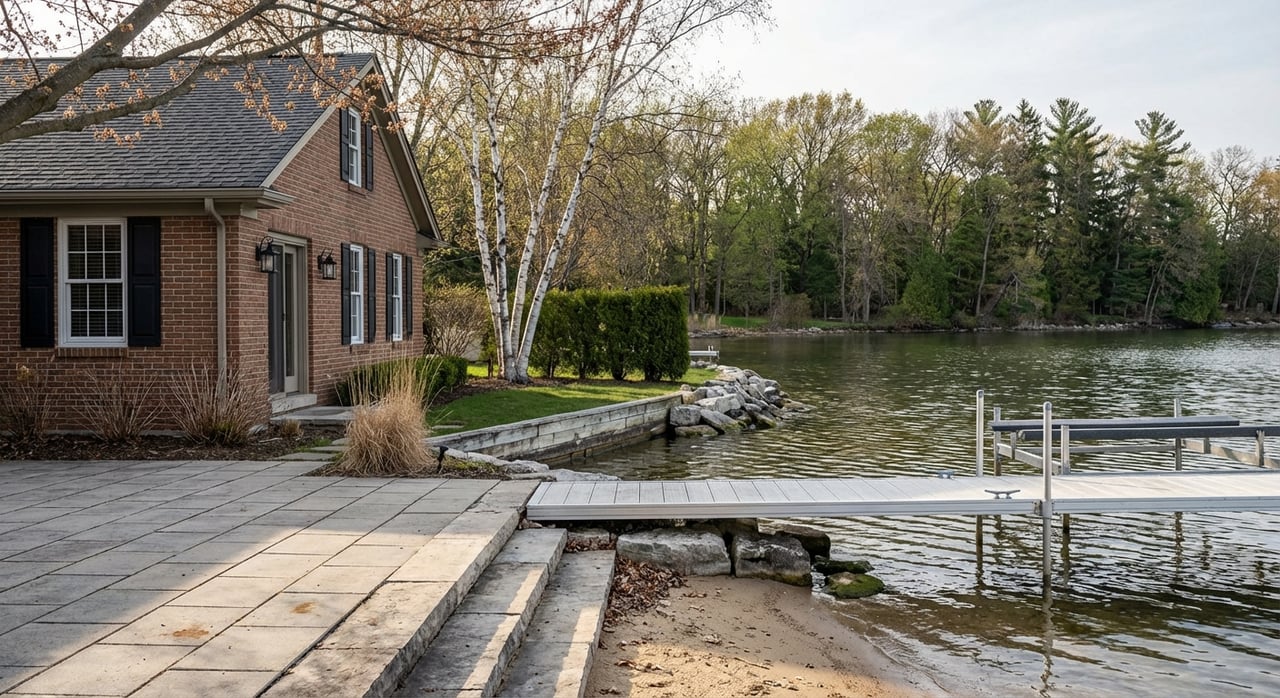
You can picture it now: coffee on the dock, kids hopping in after lunch, sunset cruises after dinner. Buying on one of Oakland County’s marquee lakes is a lifestyle choice as much as a home search. Still, the best lake purchase starts with clear due diligence. In this guide, you’ll learn how to match a lake to your style, what to check before you write an offer, and the inspections and permits that matter most. Let’s dive in.
Oakland County lakes: quick snapshot
Cass Lake
Cass Lake is the county’s largest inland lake at roughly 1,280 acres and among the deepest in the area. Heavy summer use is common, thanks in part to public access at Dodge #4 State Park. You’ll find a true all-sports experience with ample boating energy on weekends. Learn more lake basics on the Cass Lake page.
Orchard Lake
Orchard Lake is a deep, mostly residential kettle lake of about 790 to 800 acres. Homes tend to be estate scale with a private feel. There is a state-managed public launch on one shore, which adds convenience for guests while the shoreline remains largely private. See lake context on Orchard Lake’s page.
Pine Lake
Pine Lake in West Bloomfield is widely known as an all-sports lake of about 395 acres with limited public access and a country-club presence. Local descriptions often highlight exclusive shoreline and high-end homes, which can influence pricing and competition. Read a local overview of large all-sports options in West Bloomfield here.
Neighboring lakes
Union, Sylvan, Loon, and many others each offer distinct experiences. Depth, water clarity, shoreline type, and launch rules vary by lake. If a specific property catches your eye, confirm acreage, access, and association rules before touring.
Match the lake to your lifestyle
All-sports vs. no-wake
“All-sports” typically allows powered boats at speed and tow sports. “Quiet” or no-wake lakes restrict speed and wake size. This choice affects daily life: noise levels, weekend boat traffic, dock wear, and even shoreline erosion risk. For rule-of-the-lake context, review statewide boater guidance and local association rules, starting with resources like the Michigan lake-use overview, then confirm lake-specific bylaws.
Shoreline types and what they mean
Not all waterfront is the same. Sandy bottoms often mean easy swimming and strong resale appeal. Mucky or weedy areas may be fine for paddling but less ideal for wading. Steep banks can require stairs and may increase stabilization needs. For erosion control and long-term shoreline health, soft or “living shoreline” approaches are increasingly encouraged where feasible. Michigan Sea Grant offers useful background on municipal shoreline practices and tradeoffs between hard armoring and softer solutions. Explore their guidance on coastal shoreline ordinances.
Access, privacy, and rights
Public launches increase convenience for visiting friends and can raise weekend traffic. Private lakes or limited-access lakes deliver more privacy and scarcity value. Titles and lake-association rules determine what you can build, where you can dock, and how you share or protect access. Before you bid, verify deeded access to the water’s edge and check for recorded easements or shared frontage agreements.
Permits, zoning, and docks
What needs a permit
In Michigan, major work in or along inland lakes often triggers state permitting under the Natural Resources and Environmental Protection Act, Part 301 (Inland Lakes and Streams). Activities like dredging, new or replacement permanent seawalls, extensive fills, and permanent structures on bottomland generally require review. Some small, seasonal, removable docks may be exempt if they do not unreasonably interfere with navigation or neighbors. Start with the Part 301 statute for terminology and thresholds, then verify next steps with the state and your township. Review Part 301 here: Michigan Legislature — Inland Lakes and Streams.
Local rules to verify
Township rules vary and may add setbacks, height limits, and dock-length caps. West Bloomfield, Waterford, Orchard Lake Village, and others each set their own standards. Always confirm local zoning and building requirements for docks, lifts, and shoreline work before you write an offer.
Docks, lifts, and what conveys
Ask early whether the existing dock and boat lift are included in the sale. If structures were installed without required permits, you could inherit removal risk or fines. A smart offer uses a permit-confirmation contingency and requests documentation for past dredging, seawalls, or other regulated work.
Inspections and environmental checks
Septic, wells, and water quality
Many lake homes in Oakland County use private wells and onsite septic systems. Order a septic inspection to assess system type, age, and drainfield location, and pull county records where available. For well water, test for bacteria, nitrate, and heavy metals, and consider PFAS screening if the property is near known industrial or firefighting sites. The Oakland County Health Division offers permits, records, and lab resources. Start here: Oakland County Well and Water Services.
Shoreline and erosion
Have a qualified professional evaluate any seawall, revetment, or riprap, plus the slope and vegetation along the bank. Look for cracks, bulges, undermining, exposed soils, and loss of backfill. If a seawall is aging or a bank is steep, get repair or replacement estimates from a licensed marine contractor and verify permit history. For best-practice context on stabilization choices, see Michigan Sea Grant’s shoreline resources.
Docks and lifts: safety and lifespan
Ask a marine contractor to inspect pilings, decking, ties, floatation, and electrical components. Confirm that dock rights are recorded and transferable and clarify any lake-association limits on slip count, lift height, and seasonal timelines.
Aquatic invasive species (AIS)
Eurasian watermilfoil, zebra and quagga mussels, and other AIS can affect boating, swimming, and long-term maintenance costs. Check whether the lake has known infestations and how they are managed. Michigan’s invasive-species portal provides identification and reporting guidance for aquatic plants and animals. Learn more about AIS in Michigan.
Flood and insurance realities
Standard homeowners insurance does not cover flood damage. Always check the FEMA Flood Map Service Center and talk with an insurance professional about coverage options, elevation certificates, and private flood policies where available. The National Flood Insurance Program offers a clear overview of what is covered, how rates work, and how to evaluate risk. Start with FloodSmart’s guide.
Value, offers, and negotiation
What moves value on the lakes
Several attributes push price: lake size and depth, water clarity, proximity to a public launch or parking areas, and the presence and condition of private docks. Shoreline type matters, too, since sandy swim areas tend to draw more demand. Club and association amenities can increase exclusivity and price, which is often discussed around lakes like Pine. When you evaluate price, use comps from the same lake whenever possible rather than county-wide averages.
Smart contingencies to include
- Inspection contingency that covers septic, well, dock, and shoreline, plus budget allowances for likely repairs.
- Title and access review to confirm riparian rights, shared frontage, and any recorded easements.
- Permit-confirmation clause requiring sellers to provide evidence of required state and local permits for seawalls, docks, or dredging, or to escrow funds for remedy if records are missing.
- Credit or price-reduction requests based on written estimates for near-term work such as engineered seawall repair, septic replacement, or dredging.
Seasonal living and rentals
If you plan to rent periodically for added flexibility, confirm township short-term rental rules and any lake-association restrictions on rentals, parking, or guest docking. Demand and legality vary by lake and township, so verify before you rely on rental income.
Buyer’s lakeside checklist
- Confirm lake details: size, depth, access points, and whether it is locally classified as all-sports or no-wake. A quick primer on Cass is available on Wikipedia.
- Order a septic inspection and pull county septic records. Use Oakland County Well and Water Services for permits and testing.
- Test well water for bacteria, nitrate, arsenic, and lead; consider PFAS screening near known sites.
- Hire a licensed marine contractor to inspect docks, lifts, and any seawall; get repair estimates in writing.
- Verify shoreline title and any recorded easements or shared access rights before drafting an offer.
- Check state and township records for dock, seawall, and dredge permits. Review Part 301 permitting basics.
- Confirm flood zone status and request a flood insurance quote if applicable. See FloodSmart’s overview.
- Ask about lake-association dues, rules, and any planned projects like weed control or dredging that could lead to assessments.
Let’s find your perfect shoreline
You deserve a lake home that fits your lifestyle without surprises at closing. From lake-by-lake guidance to KahnCierge vendor coordination, our team helps you evaluate docks, shoreline, permits, and value with confidence. When you are ready to tour Cass, Orchard, Pine, or a hidden gem, connect with the Cindy Kahn Team for a private consultation.
FAQs
What permits do I need for a dock on an Oakland County lake?
- Many permanent structures, large seawalls, fills, and dredging require state review under Part 301, while small seasonal, removable docks may be exempt if they do not interfere with navigation; always confirm with the state and your township.
How do all-sports and no-wake lakes change daily life?
- All-sports lakes allow higher speeds and tow sports, which bring more activity and noise on weekends, while no-wake lakes favor quieter paddling and fishing with less shoreline wear.
What inspections should I order for a lakefront home in Oakland County?
- Plan for septic and well testing, a dock and lift inspection by a marine contractor, and a shoreline or seawall assessment, plus a flood-zone check and an insurance review.
Do I need flood insurance for a Michigan lake home?
- It depends on your parcel’s FEMA flood zone and lender requirements; standard homeowners policies exclude flood, so check the official map and get quotes for NFIP or private coverage.
How do shoreline type and depth affect value?
- Sandy, swimmable frontage and deeper water for larger boats usually draw higher demand, while mucky or shallow frontage can reduce appeal or raise maintenance and improvement costs.
What should I include in an offer to protect myself?
- Include contingencies for septic, well, dock, and shoreline; a permit-confirmation clause; and credits or price adjustments tied to written estimates for near-term repairs or replacements.