
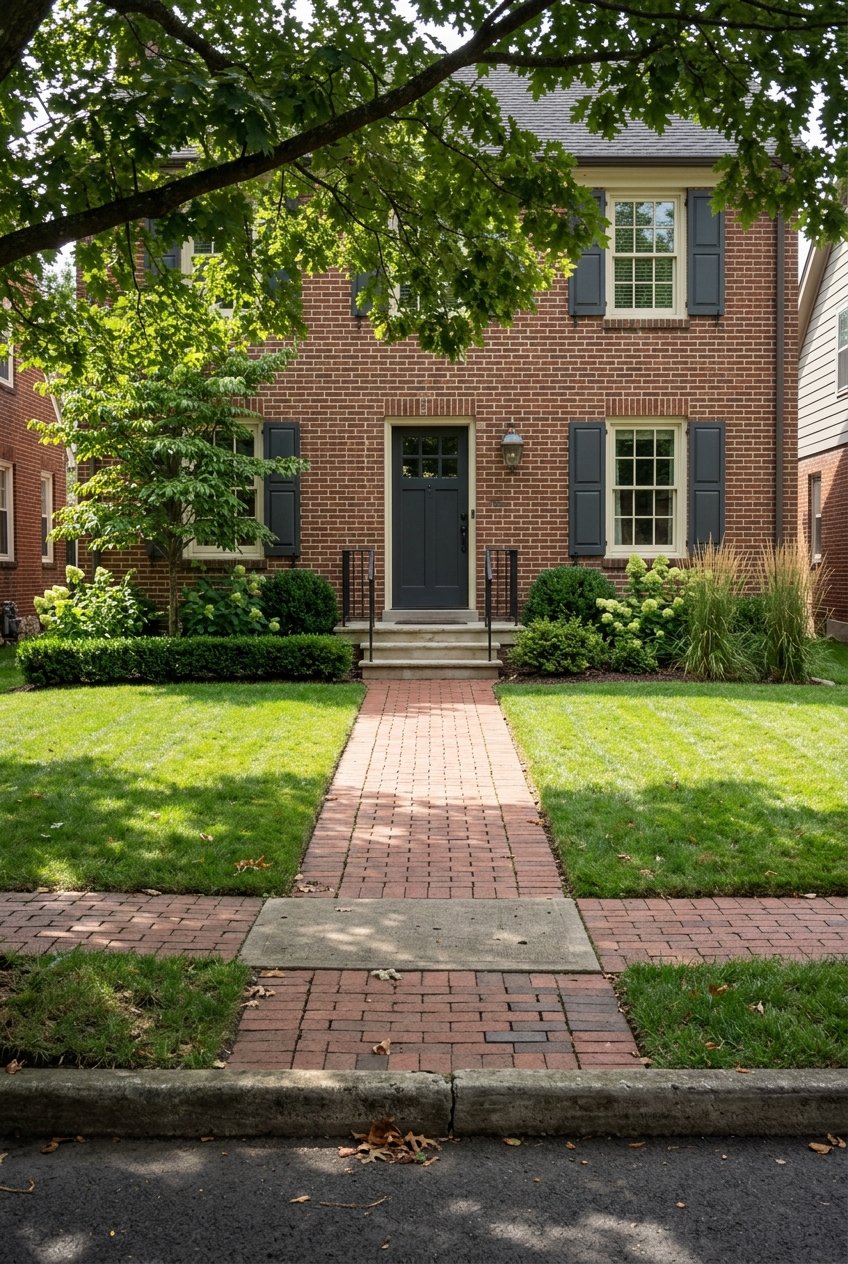
If you are looking for a place that feels intentionally preserved, not simply old, Franklin stands out. This small Oakland County village offers a rare mix of historic homes, large residential lots, and a walkable village center that still feels calm and connected to daily life. If you want to understand what makes Franklin so distinctive, this guide will help you see how its architecture, planning, and community rhythm come together. Let’s dive in.
Why Franklin Feels So Distinct
Franklin is a village of 3,139 residents, according to the 2020 Census, and its master plan describes it as a predominantly large-lot, single-family community in a rural setting with one historic village center. That combination gives you a very different experience from a typical suburban pattern. You notice open space, mature trees, and a slower pace almost immediately.
The village’s historic core is not just locally appreciated. Franklin’s historic district was listed on the National Register in 1969, and the village states that it became the first historic district in Michigan on the National Register. That status helps explain why the center of town feels cohesive and cared for rather than accidental.
Franklin’s Preservation Story
Franklin’s atmosphere is rooted in its early history. Village historic-district materials say settlers first purchased land here in 1824, the settlement was named Franklin by 1828, and growth stayed relatively slow because the rail line bypassed the area. After World War II, more homes and civic buildings were added around the original core, and Franklin was incorporated as a village on June 15, 1954.
That slower growth pattern matters when you walk or drive through the village today. Instead of feeling overbuilt, Franklin feels layered over time. You can still see the relationship between the original settlement and the later homes and civic spaces that grew around it.
Preservation Is Part of Daily Village Life
In Franklin, preservation is not treated as a side project. The village ordinance requires historic-district review for actions affecting the exterior appearance of a resource in the historic district before a permit is granted. The Historic District Commission reviews exterior features, not interior arrangements, unless interior work would visibly affect the outside of the building.
The village’s design guidelines make the review scope even clearer. The commission reviews construction, additions, alterations, repairs, moving, excavation, demolition, and major landscape changes. If you are considering a historic home in Franklin, this is an important part of the ownership experience to understand.
Change Is Guided, Not Frozen
One of the most useful things to know is that Franklin’s preservation approach is meant to guide change, not stop it. The village’s design guidelines say the district was not created to prevent changes, but to keep them compatible with the district’s historic character. That is a meaningful distinction for buyers who love older homes but still want thoughtful updates.
You can also see that mindset in local examples of adaptive reuse. Village materials note that the Old Church became a private residence, the Buel/Slade House later housed small businesses and then a medical use, and the Kreger House complex was moved and repurposed for community use and events. The result is a village that feels alive and usable, not staged.
Franklin Homes Have Range and Character
It is easy to assume a historic village offers one narrow housing type, but Franklin’s housing stock is more varied than many people expect. The village’s historic district guidelines identify recurring styles including Greek Revival, vernacular, Queen Anne, Colonial Revival, American Foursquare, and Craftsman. That variety gives the village visual interest without losing its overall sense of continuity.
What ties many of these homes together is not one exact era, but scale, trees, and setting. The village master plan notes that many homes reflect earlier centuries, while others are contemporary to the early, middle, or late twentieth century. In other words, Franklin is not defined only by age.
Common Architectural Styles in Franklin
The design guidelines offer a helpful shorthand for what you might see as you explore the village:
- Greek Revival homes often feature low-pitched roofs and columned porches.
- Queen Anne homes commonly show asymmetry, bay windows, and towers.
- Colonial Revival homes typically emphasize symmetry and centered entries.
- American Foursquare houses are often large, boxy two-story forms with hipped roofs and broad eaves.
- Craftsman homes usually include low-pitched roofs, exposed rafters, and generous porches.
These styles are not abstract categories in Franklin. The Franklin Historical Society’s self-guided tour identifies local examples such as the Broughton House and Buel/Slade House as Greek Revival, the Albert Rust House and George Bingham House as Queen Anne, the Frank D. German house as American Foursquare, and the McClow House as a Craftsman kit home.
More Than Main Houses
Franklin’s character also comes from the structures around the homes. The Franklin Historical Society’s barn tour notes that barns and related outbuildings are among the most tangible links to the village’s equestrian past. Village planning materials add that some larger lots still include horses, paddocks, and barns, with some barns dating back more than a century.
That detail changes how the village reads. Franklin feels heritage-rich and semi-rural in a way that is unusual within metro suburban surroundings. For buyers who value land, privacy, and architectural context, that setting can be especially compelling.
The Village Lifestyle in Franklin
Franklin’s appeal is not limited to its homes. The everyday lifestyle centers on a compact, low-key village core that supports walking, gathering, and civic life. This is where Franklin’s identity becomes especially clear.
The village master plan says the Village Center is connected to residential areas by open spaces, pedestrian and bike paths, and narrow winding streets that follow natural features such as woods and the Franklin River. It also notes that parking is largely out of view, traffic is slow, and people are comfortable shopping or attending seasonal events.
A Quiet, Walkable Center
The Village Center is not designed like a busy regional destination. Planning materials describe it as a compact commercial area surrounded by historic structures, with specialty retail, small service businesses, professional offices, and public uses rather than a large shopping strip. A 2021 inventory found 37 non-residential uses in the Village Center, with only a small portion classified as retail.
That helps explain the feel on the ground. Franklin reads as quiet, intentional, and character-driven. You are more likely to notice the setting, buildings, and sense of continuity than a heavy commercial buzz.
Civic Spaces That Shape Daily Life
Public and community facilities help anchor the village center. According to the village master plan, these include the Village Green, Village Hall, Franklin Public Library, the Franklin Community Center in the Kreger House, police and fire facilities, and the Franklin Community Church.
These are not just landmarks on a map. They create a rhythm of everyday use that makes the center feel lived in. That can be an important distinction if you are looking for a place with a real community structure rather than a purely residential identity.
Small-Town Traditions Still Matter
Franklin’s community life is also reinforced by recurring events and traditions. The village plan points to the Labor Day Round-Up, which has been held since 1944. The historical society’s tours and events further show how walking, storytelling, and local history are woven into normal village life.
The Franklin Public Library adds another layer to that experience. Pure Michigan notes that the library serves about 3,000 residents and offers book clubs, workshops, lectures, children’s programming, story hours, and summer reading. The Franklin Farmer’s Market on the Village Green also gives the center a recurring gathering place beyond daily errands.
Is Franklin More Village or Suburb?
The most accurate answer is that Franklin blends both, but leans strongly toward a rural-like village feel. Its own planning documents describe it as a rural setting within the metro suburbs, shaped by large residential lots, mature trees, ravines, wetlands, and a compact historic center. The village also states that it is more peaceful and has less stressful traffic than surrounding communities.
That blend is a big part of the appeal. You get a setting that feels tucked away and calm, while still being part of Oakland County’s broader residential landscape. For many buyers, that combination is exactly what makes Franklin memorable.
What Buyers Should Keep in Mind
If Franklin is on your radar, it helps to look beyond simple labels like “historic” or “charming.” What really defines the village is how architecture, land use, preservation, and community spaces work together. This is not a one-style market, and it is not a place preserved only for appearance.
A thoughtful home search here often means paying attention to the details that shape daily life, such as lot size, proximity to the village center, the presence of outbuildings, and whether a property sits within the historic district. For historic-district homes in particular, understanding the village’s exterior review framework is an important part of evaluating fit.
For sellers, Franklin’s story also matters. A home here is often best presented in context, with attention to architecture, setting, and the broader village lifestyle that supports value. In a market where character and stewardship carry real weight, strong local positioning can make a meaningful difference.
If you are considering a move in Franklin or anywhere nearby in Oakland County, working with a team that understands how to position distinctive homes and guide nuanced decisions can help you move forward with clarity. To start that conversation, connect with Cindy Kahn.
FAQs
What makes Franklin, Michigan feel historic today?
- Franklin feels historic because its village core is preserved through a formal historic district, compatible design review, and a long-standing pattern of civic spaces, older homes, and slower growth.
Are all homes in Franklin, Michigan very old?
- No. The village includes 19th-century homes, early- and mid-20th-century houses, and later homes that still fit Franklin’s overall scale, tree canopy, and setting.
What architectural styles are common in Franklin homes?
- Franklin includes Greek Revival, vernacular, Queen Anne, Colonial Revival, American Foursquare, and Craftsman homes, along with other forms such as upright-and-wing designs.
How does historic-district review work in Franklin, Michigan?
- In Franklin’s historic district, exterior work generally requires review before a permit is granted, while interior work is usually outside review unless it changes the building’s exterior appearance.
What is daily life like in Franklin Village?
- Daily life in Franklin is best described as calm, walkable, and community-oriented, with a compact village center, public gathering spaces, pedestrian connections, small businesses, library programming, and seasonal events.
Is Franklin, Michigan more rural or suburban?
- Franklin is best understood as a rural-like village enclave within the suburbs, with large lots, mature trees, natural features, and a compact historic center.