
A buyer touring a bungalow on Lakeside Drive last spring wasn't looking at the kitchen. She was pacing the yard, checking where the property line met the setback, because the listing agent had already told her the house wasn't really for sale. The land was. The 1920s cottage sitting on it was a placeholder, priced to be demolished within the year.
That listing wasn't an outlier. Walk the streets around Quarton Lake in Birmingham right now and you'll find a market split in two, both trading under the same city, the same school district, the same "Birmingham" that shows up in every headline about Oakland County's hottest suburb. One market is the citywide median everyone quotes. The other is what's actually happening on the ground in this specific enclave, and it has almost nothing to do with the house.
The median is measuring two different things at once
Birmingham's numbers, taken at face value, tell a confusing story. Over the three months ending in May 2026, homes sold for a median of $818,000, up 12.8 percent from the same period a year earlier, with the average home taking 20 days to sell compared to 13 days the year before. By August 2026, the citywide list-price median had climbed to $1.1 million. Meanwhile, Zillow's broader "typical home value" measure for Birmingham sat at $607,910 as of July 2026, actually down 0.7 percent over the past year.
A rising median, a falling typical value, and a slowing days-on-market clock, all in the same city, in the same year. That's not noise. That's two markets being averaged into one number.
In Quarton Lake Estates specifically, recent sales cluster in a range most of Birmingham never touches: contracts closing between $1.35 million and $4.6 million, on homes running roughly 3,400 to 5,600 square feet. Those aren't outliers pulling a median upward. They're a separate product entirely, and the citywide figure blends them with modest post-war colonials a few blocks over that are still trading at land value because nobody wants the house.
What "land value only" actually signals
When a Birmingham listing describes a property as being sold for its land value, it isn't a sales tactic. It's a disclosure. It tells a buyer the structure has effectively zero weight in the appraisal math, and the offer they should be making is against the lot, not the square footage.
You'll see the pattern in active listings right now: a home marketed explicitly as being sold "as-is, land value only," or described as a "rare chance for builders, developers, or end users to create a one-of-a-kind estate." These aren't distressed properties. They're often perfectly livable homes on desirable streets. What's changed is the math on what gets built next.
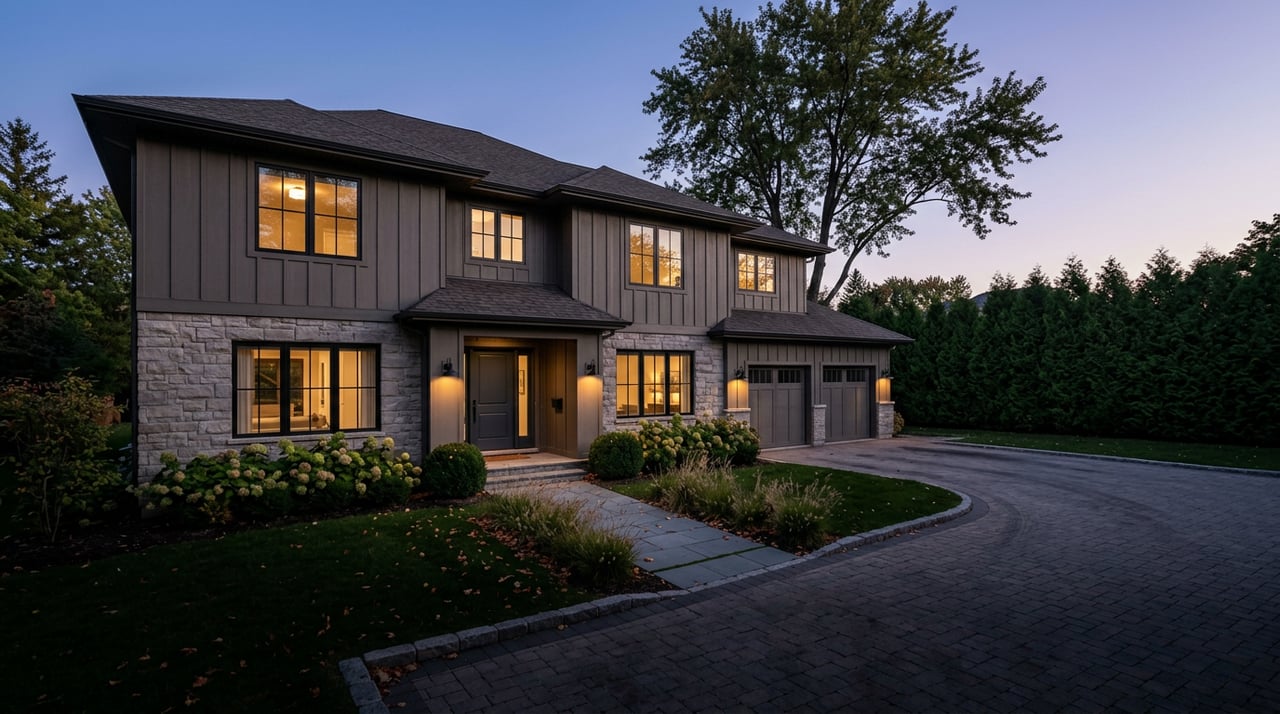
A short list of builders currently active on Birmingham teardown-and-rebuild lots gives a sense of how routine this has become: PRM Custom Builders, Champion Development, 4th Dimension Development, Yousif Building Solutions, Sandoval Homes, and LGK Builders all have new-construction homes underway or recently completed within a few minutes of downtown and the lake. That's not one boutique builder chasing a niche. That's a functioning pipeline, with enough volume that a buyer comparing two "similar" Quarton Lake area addresses might actually be comparing a renovation candidate against a rebuild candidate, priced on entirely different logic.
Why the lake itself is part of the asset
Here's the piece that doesn't show up in a comparable sales report: the City of Birmingham is in year two of a five-year, roughly $652,000 dredging project on Quarton Lake, awarded to Mid-American Group after the city received four bids ranging from under $600,000 to more than $8 million. The work targets sediment buildup in the upstream portion of the lake, north and south of Oak Street, to keep material from migrating downstream toward the dam. This year's phase wrapped in late summer 2026, with dredged material dewatering before being trucked off site, according to the city's own construction updates.
This matters to a buyer for a specific reason. A lake that silts in loses depth, clarity, and the visual and recreational quality that justifies a premium lot price in the first place. A city that's willing to fund a multi-year maintenance contract, and to publicly debate the cost against comparable programs in Warren and St. Clair Shores as one commissioner pushed for during the contract award, is signaling that the amenity is being protected as a long-term asset, not left to erode.
During the June 2025 vote to award the dredging contract, one commissioner raised concerns about equipment lingering near residents' homes after a previous dredging project, while another asked the city to benchmark project costs against nearby municipalities going forward.
That's not a footnote. It's evidence that the lake's upkeep is treated as civic infrastructure, funded and scrutinized the way the city treats its roads and sewers. When you're paying $1.35 million or more for a lot near Quarton Lake, part of what you're financing is the assumption that the water stays healthy enough to keep justifying that number.
The history explains the housing stock
Quarton Lake itself isn't a natural feature that happened to have nice houses built around it. It was engineered into its current form in 1918, after Fred Quarton and his brother sold 200 acres to a group of Detroit investors organized as the Quarton Lake Estates Company. That company platted the land into 700 lots and built a new dam in November 1918 to create the lake as we see it today, replacing an earlier configuration tied to a sawmill and later a gristmill on the Rouge River.
The practical consequence, more than a century later, is a housing stock that's genuinely old. Homes built in the platting boom of the late 1910s through the 1940s are now competing for buyer attention against homes recently completed by builders like Champion Development or Sandoval Homes. On a street where the original lots were drawn for a different era's floor plans, a lot of the older inventory simply can't compete on livable square footage without a full rebuild. That's the structural reason land value has become the dominant pricing frame here, not a fad.
Reading a Quarton Lake listing like a local
For a buyer comparing this enclave against another Birmingham pocket, a few questions do more work than the listing photos:
- Does the listing describe square footage of the structure, or only lot dimensions and frontage? A land-value listing often leads with the parcel, not the floor plan.
- Is the home's construction year decades older than its immediate neighbors? A visible age gap on the same block is often the clearest tell that a teardown cycle is already underway around it.
- Has the seller priced closer to comparable vacant lots than to comparable finished homes? That's the surest sign the structure itself carries little to no premium in the seller's own math.
None of this means every home near Quarton Lake is a teardown candidate. Plenty of the newer construction listed above sits comfortably in the finished, move-in-ready category. The point is that a buyer walking into this micro-market without asking these questions is likely to misread what they're being asked to pay for.
A short FAQ
Does the dredging project affect homes that aren't directly on the lake? The current work is concentrated on the upstream portion of Quarton Lake near Oak Street, but the broader goal, maintaining lake depth and water quality over a five-year contract running through 2029, protects the amenity value for the wider surrounding neighborhood, not just waterfront parcels.
Is a "land value only" listing negotiable the same way a normal home sale is? It's negotiated on different terms. Since the structure isn't part of the value proposition, due diligence tends to focus on lot survey lines, setback requirements, and any demolition or permitting timeline rather than home inspection findings.
Why did Zillow's typical home value figure fall while Redfin's median sale price rose in the same period? They're measuring different populations. A citywide "typical value" estimate smooths across all housing stock including older, lower-priced homes, while a rolling median sale price reflects whatever mix of homes actually closed in that window, which can skew toward the high end when luxury rebuilds are trading actively.
Buying or selling in a market this layered rewards someone who already knows which blocks are trading on land and which are trading on the house. Cindy Kahn and her team have spent decades reading Birmingham street by street, including the parts of the story a median price never tells. If you're weighing a Quarton Lake Estates purchase or wondering what your current lot is really worth in this cycle, request a KahnCierge Consultation and get the answer in local terms, not portal averages.