
Selling an estate home in Bloomfield Township is a different kind of project. The scale, the privacy considerations, and the level of buyer expectation all raise the bar. You want a clear plan that protects your time, reduces surprises, and delivers a polished launch.
In this guide, you’ll learn the exact steps to prepare a Bloomfield Township estate for market. We’ll cover permits and disclosures, pre-listing inspections, staging large rooms, curb appeal and privacy, and the marketing assets that attract qualified buyers. You’ll also see how a concierge approach keeps everything on track. Let’s dive in.
Set your strategy and timeline
Start with a high-level plan. Your goal is to reduce unknowns before day one on market.
- Define your target timing. If you plan to sell this season, work backward 6 to 8 weeks for prep, scheduling, and permits.
- Ask your agent for a data-driven pricing strategy and a written action plan for inspections, staging, and media. Luxury buyers expect strong presentation and clear documentation.
- Confirm carrying costs and property taxes, and gather utility averages and service records. You can review township millage and tax details through the Bloomfield Township Treasurer’s office.
Know your required disclosures
Transparency builds trust and reduces renegotiations. In Michigan, several disclosures and notices are standard.
Michigan Seller Disclosure Statement
Michigan law requires most residential sellers to complete the statutory Seller Disclosure Statement. You must disclose your knowledge of structural, mechanical, and environmental items using the state form. Review the requirements in the Michigan Seller Disclosure Act. Pre-listing inspections help, but they do not replace your duty to disclose known issues.
Lead-based paint for older homes
If your home was built before 1978, federal rules require you to disclose known lead-based paint information and provide the EPA/HUD pamphlet to buyers. Learn more about the lead-based paint disclosure rule.
Radon, wells, and septic
- Radon is common in Michigan. Short-term tests are inexpensive and simple. The state’s program outlines options at the Michigan EGLE radon page. If results are 4 pCi/L or higher, mitigation is routine and recommended.
- If your property has a private well or septic system, plan for inspection and documentation. Oakland County administers on-site sewage programs. Start with the Oakland County Health Division’s Environmental Health resources.
Confirm permits that can impact prep
In Bloomfield Township, certain repairs and site changes require permits or reviews. Planning early saves time.
- Building, mechanical, and electrical: Structural work, major system changes, additions, and many exterior projects require permits. Review requirements with the township’s Planning, Building & Ordinance (PBO) and Building Division.
- Tree preservation: The township has a tree preservation ordinance. Many removals and larger landscape projects need a tree permit and an arborist survey. Review the ordinance overview and process on the Tree Preservation page. Plan for replacement planting where required.
- Fences, gates, pools, hardscape, docks: These often trigger zoning or building permits. If your home is in a subdivision with covenants, verify HOA or deed restrictions first, then confirm township needs.
Order pre-listing inspections
A seller-paid pre-listing inspection gives you a head start. It reveals issues early, supports transparent marketing, and reduces the chance of last-minute price changes. Learn the common benefits in this overview of pre-listing inspections.
For estate properties, focus on:
- Roof, attic, gutters, and flashing
- Foundation and visible structural movement
- HVAC, boiler, water heater, and service records
- Electrical panel capacity and any older wiring issues
- Plumbing, water pressure, sump pumps, and drainage systems
- Windows and doors, especially seals and weather-stripping
- Pool equipment and safety features if applicable
- Outbuildings, long driveway condition, and private road or easement notes
Add specialized checks where relevant:
- A radon test if you do not have a current result on file
- Well and septic inspections if the property is not on public systems
- An arborist evaluation if you plan landscape changes or if a mature tree shows distress
Stage large rooms with intention
Big rooms can feel empty or overwhelming without the right plan. Define zones and scale furniture correctly so buyers understand how to live in the space.
- Prioritize high-impact rooms. Focus on the main living and dining spaces, the kitchen, the primary suite, a polished office, and the primary outdoor terrace.
- Create distinct zones in oversized rooms. Use area rugs, lighting, and seating groups to anchor a conversation area, a reading nook, or a music corner.
- Thin out personal items and collections. Aim for neutral, aspirational vignettes. Built-ins should look curated, not crowded.
- Consider vacant staging if needed. The right scale of furniture makes a major difference in photos and in-person tours. For general guidance on what matters most, review NAR’s staging insights.
Elevate curb appeal and privacy
First impressions begin at your approach and entry. Estate buyers notice everything.
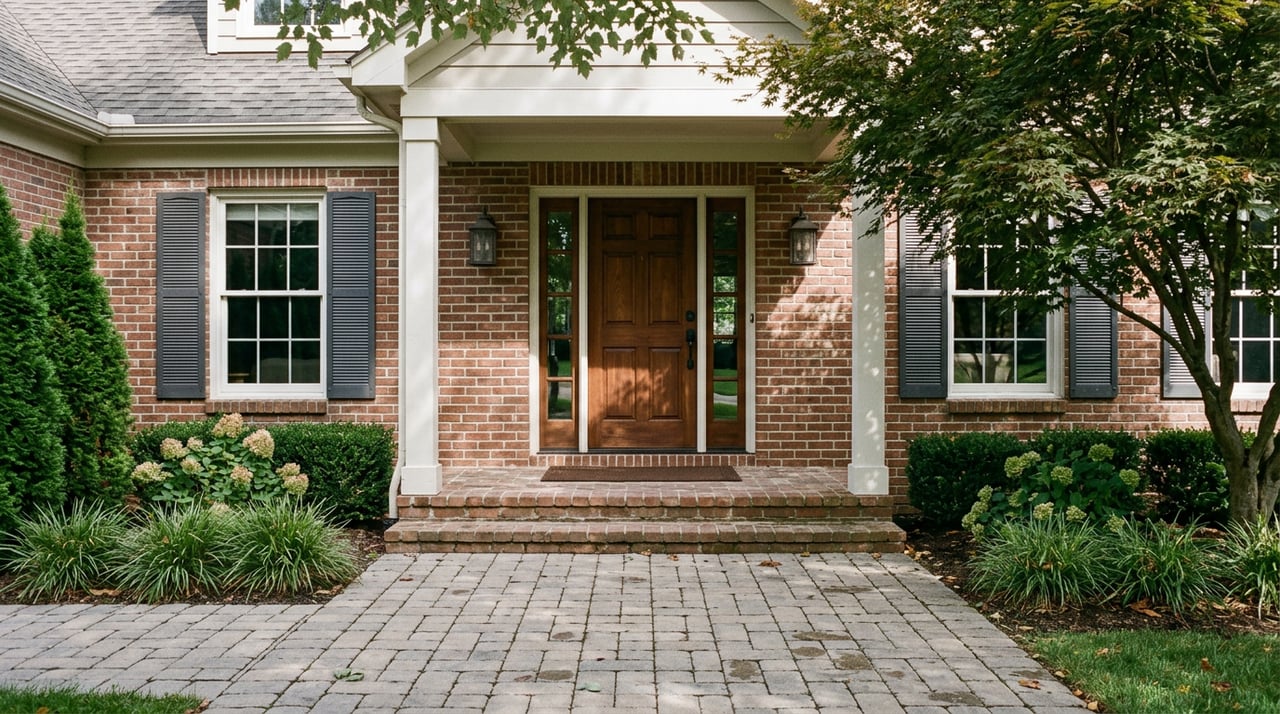
- Clean and refresh. Power-wash hard surfaces. Edge and mulch beds. Prune for form and light. Repaint the front door and touch up trim.
- Strengthen privacy. Dense evergreen screening, hedges, and thoughtful siting create natural buffers. If you consider tree removal or significant grading, revisit the township’s tree rules and secure permits before work.
- Pools, waterfront, and docks. Service and document pool equipment before listing. If you plan shoreline or dock work, confirm local permitting paths with the township and county.
Protect privacy during showings
Estate sellers often prefer private, appointment-only tours. Work with your agent to pre-qualify buyers, coordinate small broker previews, and manage access codes.
- Ensure your alarm system and entry tech are serviced. Use temporary codes for showings.
- Confirm exterior lighting and driveway maintenance for safe, confident access.
- If you plan aerial marketing, hire vendors who follow best practices. Commercial drone work must follow FAA Part 107 and Remote ID rules. Your agent should verify credentials and insurance as outlined in NAR’s drone guidance.
Build a best-in-class media package
High-end listings stand out with a coordinated media suite that feels effortless to the viewer.
- Professional photography inside and out, including twilight images
- Drone aerials for acreage, approach, and lakefront views with a certified operator
- 3D walkthroughs and accurate floor plans for remote and relocating buyers
- Dedicated property site and targeted distribution across luxury channels
Schedule capture after staging and any light cosmetic work is complete. Aim for a single photo day to keep lighting and styling consistent across every image.
Your 60-day readiness roadmap
Use this step-by-step sequence to bring your estate to market with confidence. Timelines can compress or expand based on permit scope and contractor availability.
Weeks 1 to 2: Plan, inspect, and gather documents
- Strategy meeting and valuation. Align on pricing and a launch window.
- Collect key documents. Deed, surveys, covenants, appliance and mechanical service records, past inspection reports, and any pool or dock permits.
- Book a full home inspection, radon test, roof and HVAC checks, and well or septic inspections if applicable.
Weeks 2 to 6: Permits, bids, and high-ROI fixes
- Confirm any required permits through the Bloomfield Township permit portal. Start tree-permit conversations early if you plan material landscape changes.
- Prioritize repairs based on safety and systems, then tackle paint, lighting, floors, and fixtures.
- If a certificate of occupancy is required for a recent remodel, confirm final inspections and close out before listing.
Weeks 3 to 6: Staging, storage, and finishing touches
- Move nonessential items to storage to open up rooms and closets.
- Stage the key spaces so photos and showings tell a clear story. Follow NAR’s staging guidance for room priorities.
- Final clean inside and out. Confirm exterior lighting and address markers are crisp and visible.
Weeks 4 to 7: Media, launch, and private previews
- Book photography, drone, and 3D capture on a single coordinated day with a Part 107-certified pilot per NAR drone best practices.
- Launch with polished assets and targeted outreach to qualified buyer agents. Consider invitation-only previews for vetted prospects.
- Keep documentation accessible. Pre-list inspection summary, radon results, well or septic reports, receipts, and warranties build buyer confidence.
How KahnCierge simplifies everything
A white-glove, concierge approach removes the friction that often delays estate listings. The right team coordinates inspections, arborists and permits, vetted contractors, staging, storage, and media on a tight timeline. You get a single point of contact, vendor accountability, and a smoother path from prep to launch.
With a concierge-style plan, you compress market readiness, control carrying costs, and present your home at its best. It is a fit for Bloomfield Township estates where multiple vendors, permits, and high buyer expectations come together.
Final thoughts
Preparing a Bloomfield Township estate home to sell is about precision. When you handle disclosures, get ahead of permits, invest in staging where it counts, and deliver top-tier media, you increase buyer confidence and strengthen your negotiating position. If you want a partner to orchestrate every step with discretion and care, the Cindy Kahn Team is here to help. Request Your KahnCierge Consultation.
FAQs
What disclosures do Bloomfield Township estate sellers need in Michigan?
- Most residential sellers must complete the state Seller Disclosure Statement, and older homes may require lead-based paint disclosures. Review the Michigan Seller Disclosure Act and the EPA’s lead disclosure rules.
Do I need permits to remove trees or add screening before listing?
- Often yes. Bloomfield Township’s tree preservation rules can require a permit and arborist survey for removals, with replacement planting in some cases. Start with the Tree Preservation page.
Should I test for radon before listing my estate home?
- Yes. Radon is common in Michigan, and testing is simple. If levels exceed 4 pCi/L, mitigation is routine and recommended. See the Michigan EGLE radon program.
What if my property has a private well or septic system?
- Treat these as material items. Arrange a pre-list inspection and gather service records. Check the Oakland County Health Division for local requirements and approved resources.
Are drone photos allowed for my listing?
- Yes, but your vendor must follow FAA Part 107 rules. Ask for proof of certification and insurance. Learn more in NAR’s drone guidance.