
Moving to a new community is exciting, but it can also feel overwhelming when two nearby villages offer very different day-to-day lifestyles. If you are considering Bingham Farms or Beverly Hills, you likely want more than a map and a few listings. You want to know how each place lives, how the market moves, and what details matter before you commit. This guide will help you compare both villages with a practical relocation lens. Let’s dive in.
Bingham Farms vs. Beverly Hills
Bingham Farms and Beverly Hills sit close together in Oakland County, but they serve different priorities. Bingham Farms is a very small village of about 1.2 square miles, with a notable office concentration along the Telegraph Road corridor. Beverly Hills is larger, a little over 4 square miles, and is primarily residential with limited commercial zoning and no industrial zoning.
That difference shapes the feel of each village. If you want a tighter, highly residential setting with executive-office convenience nearby, Bingham Farms may stand out. If you want a broader residential village with more parks, open space, and community programming, Beverly Hills often offers a stronger fit.
Location and daily access
For many relocating buyers, daily convenience matters just as much as the home itself. In Bingham Farms, Telegraph Road forms the western boundary, 13 Mile Road is the main east-west route, 14 Mile Road is the northern boundary, and I-696 sits about 1.5 miles south. The village master plan specifically points to access to Southfield, Birmingham, Farmington Hills, and Detroit through this road network.
In Beverly Hills, the commute picture often centers on Southfield Road, Beverly Road, Lahser, Telegraph, and I-696. The village borders Royal Oak, Birmingham, Southfield, Bingham Farms, and Bloomfield Township, which gives you several options for reaching nearby business districts, shopping, and services.
If you commute regularly, route testing is especially important right now. MDOT reported 2026 closures affecting parts of westbound I-696 and ramps tied to Lahser, Telegraph, M-10, Southfield Road, and 11 Mile as part of the Restore the Reuther project. Before choosing a street, it is smart to drive your likely route during peak hours.
How the two housing markets compare
Both villages are relatively competitive, low-inventory markets. That means you should expect limited choices at any given time and a buying process that can move quickly. It also means monthly market numbers can shift fast because these are small villages with a limited number of closings.
Bingham Farms currently sits at a higher price point on sold data. Redfin shows a median sale price of $1.0 million, median days on market of 17.5, and Realtor.com shows only 5 active homes. Beverly Hills shows a median sale price of $635,000 on Redfin, around 21 median days on market, 37 active homes on Realtor.com, and a 98% sale-to-list ratio.
Here is the simplest way to think about it: Bingham Farms is tighter and generally higher priced, while Beverly Hills offers more inventory and a lower median sold price. Neither market usually rewards hesitation.
Nearby alternatives in context
If you are relocating from outside the area, it helps to understand where these villages sit relative to nearby communities. Birmingham remains the larger luxury benchmark, with a median listing price of $1.30 million, 148 homes for sale, and a 29-day median market time. Franklin is close to the million-dollar range as well, with a $997,000 median listing price, 17 homes for sale, and a 27-day median market time.
Southfield offers a very different value point. Its median list price is about $232,500, with 198 homes for sale and a 54-day median market time. That comparison helps frame Bingham Farms and Beverly Hills as middle-to-upper tier relocation options in this part of Oakland County.
Home styles you are likely to find
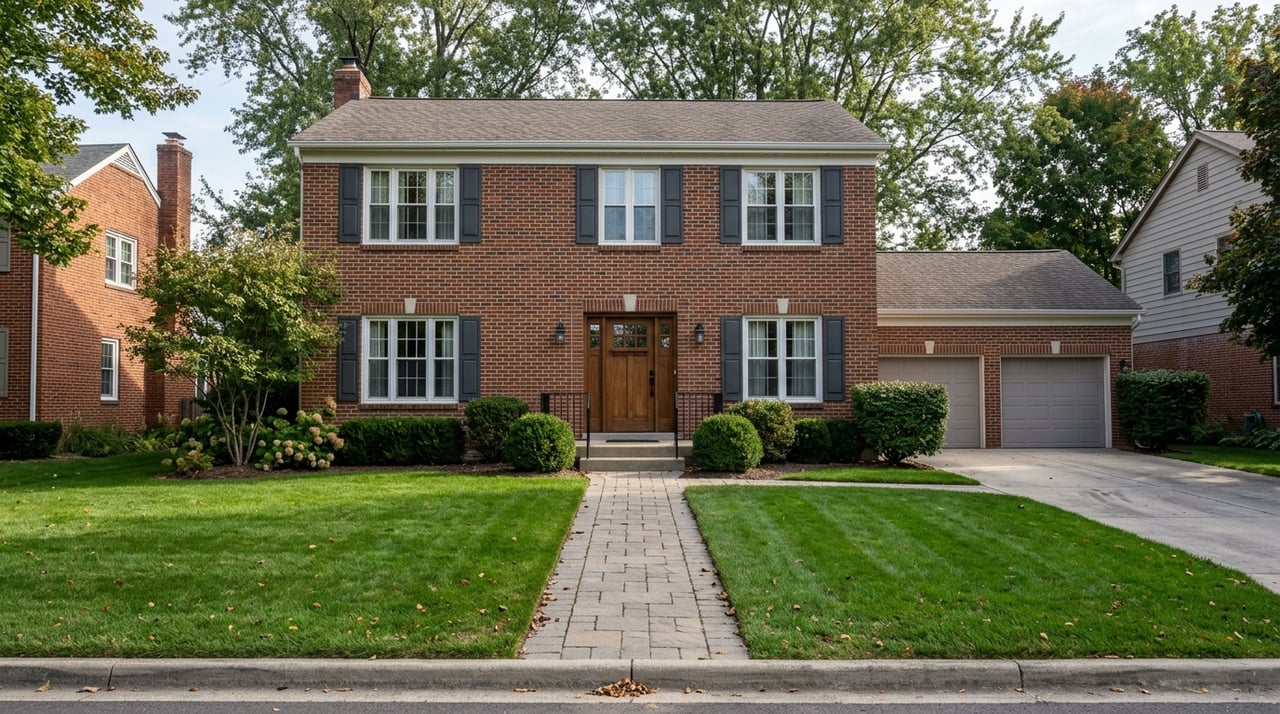
Both villages lean toward established single-family housing, but the style mix is not identical. In Bingham Farms, design guidance references Greek Revival, Italianate, Cape Cod, and Colonial styles as neighborhood character cues. Local market descriptions also point to colonial-style, ranch-style, stone, and custom contemporary homes on wooded lots.
Beverly Hills is also primarily residential, with a mix that commonly includes brick ranch homes, Colonial Revival homes, and larger vintage acreage properties. In both villages, these descriptions are best understood as broad patterns rather than a promise of exact inventory.
When you tour homes, focus on how the lot, the street, and the house work together. In established villages like these, architectural character is important, but so is how the home fits your routine.
Street-by-street pocket differences
One of the most helpful relocation strategies is to think in micro-pockets rather than broad ZIP code assumptions. In Bingham Farms, the clearest practical distinction is between Telegraph-facing office and medical frontage and the quieter residential streets farther east. Because the village is small, even a short distance can noticeably change the day-to-day feel.
In Beverly Hills, the most useful lens is often park-centered residential pockets versus border streets. Areas near Beverly Park, Beverly Green, Riverside Park, Hidden Rivers Nature Area, Douglas Evans Nature Preserve, and the Wendbrook area can feel different from village edges closer to Birmingham or Southfield. That does not make one better than another, but it does make address-level comparison essential.
Parks and recreation in Beverly Hills
If access to parks and local events is important, Beverly Hills has a strong case. The village manages 70.9 acres of open space, including 37.9 acres classified as park. Key public spaces include Beverly Park, Beverly Green, Riverside Park, Hidden Rivers Nature Area, Douglas Evans Nature Preserve, and a potential Wendbrook Lane village park.
Beverly Park is the hub of the system. At 34.7 acres, it hosts recurring events such as Halloween Hoot, the Memorial Parade and Carnival, summer concerts, Java and Jazz, movie nights, Read in the Park, and Winter Family Fun Day. For many relocating buyers, that kind of regular programming says a lot about how a community functions.
Civic life and local amenities
Beverly Hills also has a visible civic and volunteer framework. The village recreation plan names the Beverly Hills Lions Club, Boy and Girl Scout programs, Beverly Hills Little League, and partnerships with Baldwin Public Library and Birmingham Next. If you want a village where organized activities and local programming are part of the rhythm of life, this is worth noting.
For buyers who value private club access, there are several nearby options. Birmingham Country Club offers an 18-hole championship course, racquet and paddle courts, a pool, fitness facilities, and dining. Oakland Hills Country Club in Bloomfield Hills and Franklin Hills Country Club in Franklin are also nearby private-club options with golf and additional member amenities.
Schools and address-level verification
For many buyers, school logistics are a key part of a move. Birmingham Public Schools is an important regional amenity, and the district notes that its facilities and fields are conveniently located for residents of Birmingham, Beverly Hills, Bingham Farms, Franklin, West Bloomfield, Bloomfield Hills, Troy, and Southfield. Bingham Farms Elementary is a Birmingham Public Schools building.
Even so, school assignment should always be verified by address before you buy. If this is high on your priority list, one of the most useful steps is to narrow homes only after confirming the current assignment and commute pattern.
What a smart relocation plan looks like
In fast-moving markets like these, preparation matters. Bingham Farms homes are going pending in about 17.5 days on Redfin, while Beverly Hills homes are often moving in roughly 21 to 27 days depending on the dataset. That pace can put pressure on buyers who start browsing before their financing and search criteria are fully organized.
A practical relocation sequence looks like this:
- Define your daily commute needs
- Verify school assignment by address if relevant to your move
- Set your budget and obtain preapproval before serious touring
- Compare street-level pockets, not just village names
- Be ready to act quickly when the right home appears
Preapproval is especially important in this type of market. Sellers frequently ask for it, and preapproval letters are not final loan approval. They also typically expire in 30 to 60 days, so timing matters.
Closing costs and buying readiness
After an offer is accepted, the process usually moves through underwriting documentation, inspection, insurance, title and closing services, and final signing. Closing costs typically run about 2% to 5% of the purchase price. For relocating buyers, that means your planning should cover both your down payment strategy and your full cash-to-close picture.
This is one reason a guided, local search can save time. In villages where inventory is limited and street-level differences matter, the goal is not just finding a house that checks boxes. It is finding the home that actually works for your routine, timing, and long-term priorities.
Which village may fit you best
If you want a very small-village setting, quick access to major roadways, and proximity to office concentrations, Bingham Farms may feel like the more natural fit. If you want a broader residential village with a more developed park system, recurring community events, and somewhat more available inventory, Beverly Hills may align better.
The right answer usually comes down to three address-level checks: commute, school assignment, and lot-and-home fit. Once those basics are in place, you can layer in lifestyle preferences like park access, club proximity, or whether you prefer a quieter interior residential street over a more connected border location.
Relocating well is about more than arriving in the right village. It is about choosing the right street, the right home, and the right support along the way. If you are planning a move to Bingham Farms or Beverly Hills, Cindy Kahn offers a polished, concierge-level approach to help you navigate the market with confidence.
FAQs
What is the main difference between living in Bingham Farms and Beverly Hills?
- Bingham Farms is a smaller village with a notable Telegraph Road office corridor and a tighter housing supply, while Beverly Hills is a larger, mostly residential village with more parks, open space, and community programming.
How competitive is the housing market in Bingham Farms and Beverly Hills?
- Both markets are relatively fast-moving and low in inventory, with Bingham Farms around 17.5 median days on market and Beverly Hills around 21 to 27 days depending on the source.
What price range should you expect in Bingham Farms and Beverly Hills?
- Recent market snapshots show Bingham Farms with a median sale price around $1.0 million and Beverly Hills around $635,000, though small-market data can shift with a limited number of sales.
What roads matter most for commuting from Bingham Farms and Beverly Hills?
- Bingham Farms is closely tied to Telegraph Road, 13 Mile Road, 14 Mile Road, and nearby I-696, while Beverly Hills buyers often focus on Southfield Road, Beverly Road, Lahser, Telegraph, and I-696.
What should relocating buyers verify before buying in Bingham Farms or Beverly Hills?
- The most important checks are commute patterns, school assignment by address if needed for your move, and whether the specific lot, street, and home layout fit your daily routine.